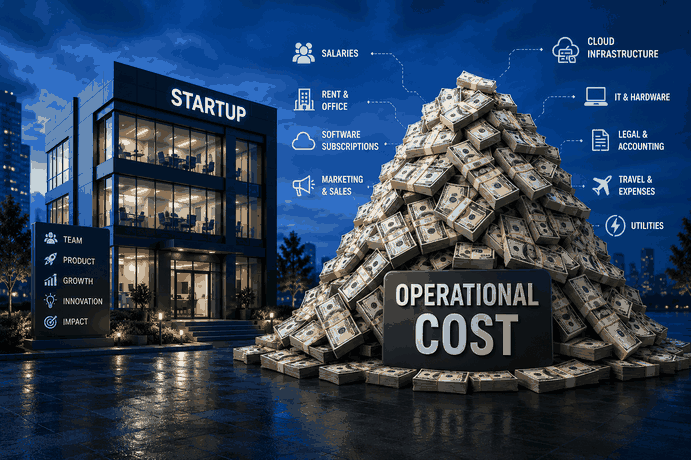
- Startup operational costs are split into one-time capital expenses (CapEx) and recurring operational expenses (OpEx).
- Overhead includes fixed monthly costs like rent, salaries, and software that continue regardless of revenue.
- Early hardware and IT procurement choices can either free up capital or tie it down unnecessarily.
- Shifting more spending toward OpEx gives startups greater flexibility as their business grows and changes.
Why Your Cost Structure Matters More Than You Think
Most founders think about startup costs once, at the start, then move on. The numbers rarely sort themselves out.
The decisions you make about what to spend, when and how to categorize it will shape your runway and your investor story. A bloated overhead line or an unexplained CapEx spike raises questions that are hard to answer in a pitch meeting. Getting this right early matters.
What Are Startup Operational Costs
Startup operational costs are all the expenses required to keep your business running, from hardware on your desk to software subscriptions to monthly rent. At the broadest level they split into two categories.
Capital Expenditures (CapEx)
CapEx is money spent on long-term assets like servers, office furniture, development tools built with a software development agency and security systems. These costs are recorded on your balance sheet and depreciated over time instead of being expensed all at once.
Operational Expenditures (OpEx)
OpEx includes the regular, ongoing costs needed to keep your business running day to day. These expenses are recorded when they happen. Examples include salaries and contractor payments, cloud hosting and software subscriptions, office rent and utilities, and legal or accounting fees.
CapEx vs OpEx: The Difference at a Glance
Understanding the difference between Capital Expenditures (CapEx) and Operational Expenditures (OpEx) is essential. It impacts your taxes, cash flow, and how investors see your startup.
| Aspect | CapEx | OpEx |
|---|---|---|
| Definition | One-time purchase of long-term assets | Recurring day-to-day business expenses |
| Examples | Servers, hardware, office equipment | Cloud subscriptions, salaries, SaaS tools |
| Balance Sheet | Recorded as an asset and depreciated over time | Expensed immediately in the income statement |
| Cash Impact | Large upfront payment | Spread over monthly or annual payments |
| Flexibility | Fixed and harder to reverse | Easier to scale up or reduce |
| Tax Treatment | Depreciated over the asset’s lifecycle | Fully deductible in the year incurred |
| Best For | Assets with multi-year value | Short-term operational needs |
For most early-stage startups, focusing more on OpEx is smarter. It keeps your finances flexible and easier to adjust as your business grows.
Understanding Startup Overhead
Startup overhead includes fixed and semi-fixed costs that your business must pay regardless of how much revenue you generate. These costs do not grow with sales and are often hard to reduce. Key overhead categories include:
- Workspace costs: Office rent, co-working memberships, or remote work setup allowances
- Software and tools: SaaS platforms, productivity tools, and subscriptions through SaaS development services that can add up quickly
- People costs: Salaries, payroll taxes, and benefits, usually the largest overhead expense
- Admin and compliance: Legal fees, accounting services, and insurance premiums often underestimated
Regularly audit your software stack. Many startups pay for tools that only a few team members actually use.
Hardware Costs and IT Procurement
Hardware spending is a common area where startups overspend early on. Thoughtful decisions about what and when to buy can save valuable capital.
Buy vs Lease vs Cloud
- Buying hardware is a CapEx investment. It makes sense if you have a clear long-term need and enough cash without risking your runway.
- Leasing hardware converts the cost into OpEx. It spreads payments and often includes refresh cycles. This is usually the best choice for early-stage startups.
- One practical option worth exploring is laptop rental for startups, which converts what would otherwise be a CapEx purchase into a predictable monthly OpEx cost while keeping your team’s devices current.
- If your startup also needs a customer-facing site or web application as part of its operational setup, evaluating web development services early helps you plan that spend as part of your broader cost model.
- Cloud infrastructure removes most physical hardware needs. Services like AWS, Google Cloud, and Azure let you pay based on actual usage. This gives you maximum financial flexibility.
IT Procurement Best Practices
- Clearly define what you need before buying. Avoid expensive wish lists.
- Standardize devices across your team to simplify support and security.
- Negotiate startup pricing or pilot deals with vendors before committing.
- Track every asset from day one, including purchase date, cost, and assigned user.
- For a more detailed walkthrough of how to set up IT for a startup covering device policies, cloud architecture and security from scratch it’s worth going through that process before your first procurement decision.
- Include a hardware refresh cycle in your annual budget to avoid surprises.
CapEx Management for Startups
Managing CapEx means making every capital investment purposeful and well-documented.
Three Key Tips
- Separate your CapEx budget from your operating budget to clearly understand your monthly burn rate.
- Use a depreciation schedule for all CapEx purchases to plan for replacement costs.
- Buy only what you need to operate effectively now. Avoid spending on future needs that tie up cash. . For startups whose product roadmap includes a consumer or B2B app, mobile app development is another CapEx-adjacent investment that benefits from the same build-vs-lease thinking applied to hardware.
CapEx makes sense when you have a clear long-term need, lower total ownership costs than OpEx, and a real operational advantage. Otherwise, OpEx is usually the safer choice.
Focus on managing your CapEx and OpEx wisely to keep your startup flexible and financially healthy. Regularly review your costs and make informed decisions to protect your runway.
Ready to take control of your startup costs? Start by mapping your expenses and planning your budget today.
Frequently Asked Questions
Operational costs cover all business expenses including one-time capital purchases and recurring expenses. Overhead refers specifically to fixed recurring costs like rent, salaries, and software subscriptions.
Choose CapEx when you have a clear long-term need and the total cost over multiple years is less than the OpEx alternative. Early-stage startups usually benefit more from leasing or cloud solutions to preserve cash and flexibility.
Define your actual needs, standardize devices, negotiate startup pricing, and track assets from purchase. Plan for hardware refreshes in your budget to avoid emergency replacements.
A quarterly review is ideal. This helps catch unused tools, changes in headcount, and shifting hardware needs, keeping your cost model accurate and useful for planning.