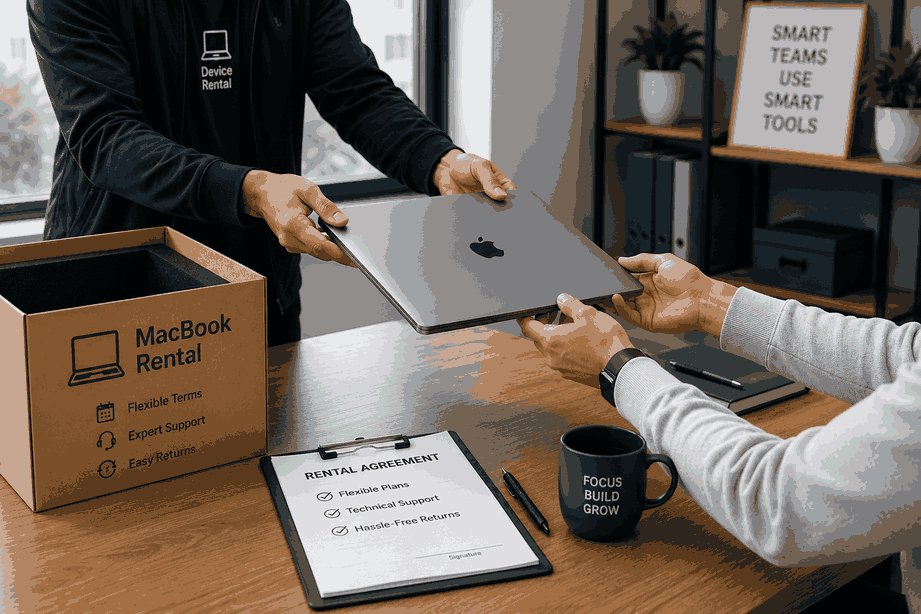
- Buying MacBooks means tying up cash in devices that lose value over time.
- Renting changes that to flexible monthly payments, freeing up capital for growth.
- Leasing offers faster setup, easier scaling and maintenance handled by the vendor.
- Keeping cash for product, people and growth is critical in early startup stages.
- Renting also removes the headache of device management and secure data wiping at the end of life.
- Renting MacBooks works well from pre-seed all the way through post-Series A.
The Real Cost of Buying MacBooks for a Startup
A MacBook Pro is not a cheap purchase. Multiply that across a growing team and the upfront cost becomes a significant drain on a startup’s cash position before a single line of code is written or a single customer is acquired.
But the upfront price is only part of the problem. Once you own the hardware, you own the maintenance, the repairs, the asset tracking and the eventual headache of wiping and disposing of devices when someone leaves. For a team without dedicated IT support, that burden lands on whoever has the time, which is usually nobody.
Renting changes the equation entirely. You get access to the same hardware. You skip the capital outlay and the ownership burden. And you keep your cash where it actually creates value for the business.
MacBook rental is one piece of a broader cost discipline strategy. If you want to see how it fits alongside other spending decisions, our guide on how founders can reduce startup spending by 40% maps out every category where early-stage startups consistently overspend.
Buying vs Renting a MacBook: What Startups Should Know
Here is how the two approaches compare on the factors that matter most to a startup.
| Factor | Buying a MacBook | Renting a MacBook |
|---|---|---|
| Upfront cost | High. Full device price paid immediately | Low. Predictable monthly rental fee only |
| Capital impact | Locked into a depreciating CapEx asset | Preserved as OpEx. Funds stay available for growth |
| Flexibility | Fixed. Scaling up requires fresh purchases | Easy to add or return devices as headcount changes |
| Maintenance | Your cost and responsibility to manage | Handled by vendor. Repairs and replacements included |
| Hardware refresh | Manual and expensive. Requires new purchase cycle | Built into rental term. Access to updated models |
| Procurement speed | Slow. Approval, purchase and setup takes time | Fast. Devices can be deployed within days |
| End-of-life handling | Your team handles resale, wipe and disposal | Vendor manages certified data erasure and collection |
Laptop Leasing Benefits That Actually Matter for Startups
Capital Preservation
Preserving capital is one of the most important disciplines in the early stages of a startup. Every rupee or dollar locked into a MacBook purchase is a rupee or dollar that cannot go toward hiring, sass product development or customer acquisition.
Renting converts hardware spend from CapEx to OpEx. Rental payments are treated as an operating expense, fully deductible in the year they occur and far easier to adjust as the business evolves. For a startup managing burn rate carefully, this distinction matters a great deal.
For a fuller breakdown of how hardware rental fits into your overall startup operational costs and how the CapEx to OpEx shift affects your balance sheet and investor conversations, our operational costs guide covers this in detail.
Faster and Simpler Equipment Procurement
Traditional equipment procurement is slow. Approvals, purchase orders, shipping times, device setup and configuration. By the time a new hire gets a working MacBook, they may already be through their first week.
Rental programs flip this. Devices can be configured, enrolled in MDM and shipped within days. New team members are productive from day one without the procurement bottleneck slowing down onboarding. For a startup hiring quickly, this speed is a genuine operational advantage. If configuring devices, enforcing security policies and managing remote teams across multiple locations is becoming its own challenge, our guide on how to set up IT for a startup covers the full infrastructure picture beyond just device procurement.
Scale Without the Financial Commitment
Startup headcount rarely grows in a predictable straight line. A funding round happens and you hire fast. A project ends and contractor relationships wind down. Buying hardware makes sense when your team size is stable and predictable. For most early-stage startups, neither of those conditions applies.
Renting lets you add MacBooks when you need them and return them when you do not. You are never stuck with devices you are paying to store or scrambling to source when a new hire starts unexpectedly. For startups whose next major capital decision after hardware is a custom product build, partnering with a software development agency involves a similar deliberate timing and contract clarity mindset as choosing a hardware rental program.
Hardware That Stays Current
Apple updates its MacBook lineup regularly. A device purchased today will be behind the latest specs within a year or two. For teams doing intensive development, design or creative work, running on outdated hardware creates real friction.
Rental terms typically include the option to refresh hardware at the end of the lease period. You get access to current models without the cost of a new purchase cycle and without the residual value problem of trying to sell or trade in old devices. For startups with a consumer or B2B app on the roadmap, mobile app development is another capital investment where the same build timing and vendor selection discipline covered here applies.
Maintenance and Support Without the Admin
When a purchased MacBook needs a repair, your team deals with it. Warranty claims, AppleCare, third-party repair shops and the downtime in between all consume time nobody planned for. Rental programs include maintenance and replacement as part of the service. A faulty device gets swapped out. The admin stays with the vendor, not your operations or finance team.
When Renting MacBooks Is the Better Choice
- You need fast device deployment for a growing team
- You want to keep capital available for growth activities
- Your headcount changes frequently
- You have remote employees needing shipped devices
- You want hardware expenses as operating costs
- You onboard contractors or short-term staff
Choosing the Right MacBook Rental Program
Look for flexible plans that match your team’s needs. The best providers handle MDM setup, secure data wiping and offer responsive support.
If your team uses a mix of operating systems or you want to compare all available hardware options before committing, our guide to laptop rental for startups covers the full range of devices, leasing structures and vendor evaluation criteria.
Look for vendors who include MDM enrollment, data security on return and responsive support. A rental agreement that leaves you managing device setup, software configuration and end-of-life data wipe yourself is not saving you much over buying outright.
Getting the best rental terms comes down to knowing how to negotiate and our guide to vendor negotiation for startups covers how to approach pricing conversations, request pilot arrangements and push for deferred payment terms with any hardware provider.
The best programs treat equipment procurement as a service, not just a transaction. You tell them what you need, they configure and deliver and they handle everything on the way back out. That is the version of MacBook rental that actually frees up your team to focus on building the business. Startups building a marketing site or customer portal alongside their core product should plan web development services with the same capital discipline applied to hardware, scoping it at the right stage rather than rushing the investment.
Look for rental programs that offer flexible terms, fast deployment and built-in IT support.
Frequently Asked Questions
Renting preserves cash, turns large purchases into manageable payments, speeds up onboarding and removes maintenance and disposal headaches.
Capital preservation, faster onboarding, flexible scaling, access to current hardware and vendor-managed maintenance.
Rental providers deliver configured, ready-to-use devices fast, avoiding delays in approvals and setup.
Yes. Renting avoids upfront costs, depreciation risk and includes maintenance. Rental payments are fully deductible as operating expenses.