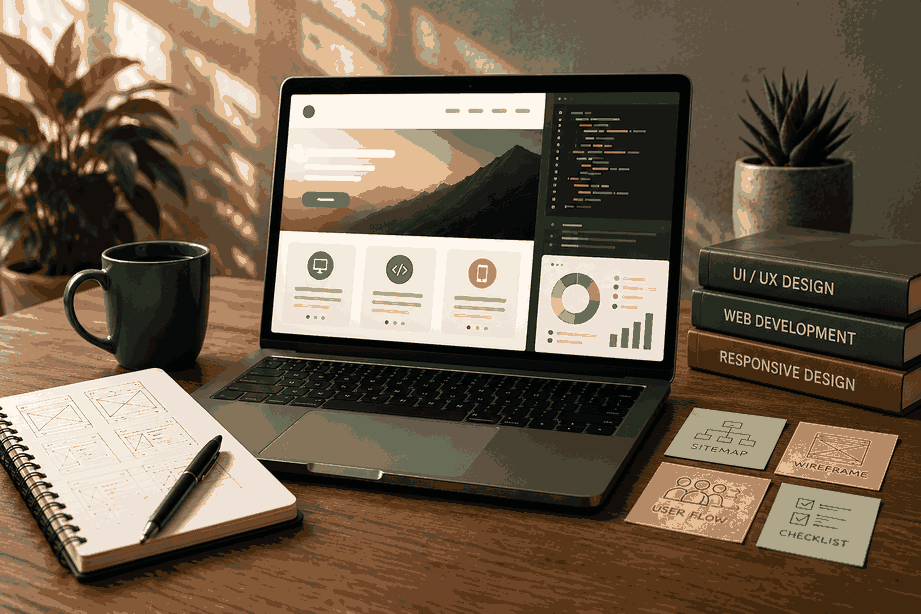
- Web development covers everything from simple informational sites to complex ecommerce platforms and custom web apps.
- Custom development is tailored to your unique business logic, giving you full control over performance and scalability.
- Ecommerce and web application development require specialized expertise for best results.
- Web design and development should be evaluated together since design impacts technical architecture and vice versa.
- Define your go-to-market strategy before development so your site builds the right features and converts visitors effectively.
What Are Web Development Services?
Web development services include planning, designing, engineering and launching websites and browser-based applications. This can range from a basic five-page site to enterprise portals serving millions of users daily.
A top-tier web development agency will cover everything from frontend interfaces and backend logic to hosting infrastructure and post-launch maintenance. They also integrate SEO, speed optimization and analytics right from the start, not as afterthoughts.
Types of Web Development Services
Custom Web Development
Custom development is built from the ground up to your exact specs. It gives you full control over user flows, integrations and scalability. It’s ideal when your business logic is complex, compliance matters or off-the-shelf platforms fall short.
Popular frameworks include React, Next.js, Vue.js, Angular, Laravel, Django and Node.js. The stack should be chosen based on your needs, not the vendor’s preferences.
Web Design and Development
The best teams combine UX research, wireframing, responsive design, accessibility compliance, frontend development and CMS integration. This integrated approach ensures design decisions align with technical possibilities.
Ecommerce Development
Ecommerce development ranges from Shopify to Magento to custom headless commerce. It focuses on building fast-loading, conversion-optimized online stores with secure checkout and inventory management. Integration with ERP, PIM and logistics is key.
Web Application Development
Browser-based software like SaaS dashboards, customer portals or booking systems needs strong backend architecture. Security, session management and compliance (SOC 2, HIPAA, ISO 27001) matter just as much. Getting this right from day one makes a real difference. It separates a web application that can serve enterprise customers from one that needs a costly compliance retrofit later. Our guide to building enterprise-grade systems for startups covers this challenge.
If your project is more like a SaaS dashboard than a traditional website, saas development follows a different lifecycle. Multi-tenant architecture and subscription billing are core considerations from day one.
CMS Development and Integration
Whether WordPress or headless CMS like Contentful or Sanity, the right CMS matches your editorial workflow, traffic and integration needs.
Maintenance and Support
Websites need ongoing updates, security patches, performance tuning and analytics reviews. Confirm maintenance scope, response times and escalation paths upfront.
The Web Development Lifecycle
Discovery
Define goals, users, competitors and tech needs. Invest 10 to 15% of your budget here for big returns later.
UX Design and Architecture
Wireframes, prototypes and technical architecture documents reviewed early to avoid costly changes down the line.
Visual Design
High-fidelity mockups and design systems that guide every stage of development.
Development and Integration
Frontend components, backend APIs, third-party tools, version control and automated testing.
QA and Performance Testing
Functional, cross-browser, accessibility, security and load testing, plus Core Web Vitals benchmarks.
Launch and Post-Launch
DNS setup, SSL, CDN, sitemap, 30-day support window and ongoing maintenance planning.
Key Technical Factors to Evaluate
- Performance: Core Web Vitals impact SEO and UX. Ask for benchmarks.
- Mobile-First: Over 60% of web traffic is mobile. Test on real devices.
- Security: HTTPS, input validation, encryption and vulnerability audits are non-negotiable.
- SEO-Ready Build: Semantic HTML, structured data, sitemaps, canonical tags and fast load times from day one.
- Scalability and Hosting: Cloud hosting with auto-scaling, CDN and backups preferred.
- Accessibility: WCAG 2.1 AA compliance protects users and reduces legal risk.
- If what you’re actually building is a native or cross-platform app rather than a browser-based site, Mobile App Development involves a different set of platform, performance, and app-store considerations worth understanding upfront.
How to Choose the Right Agency
- Clearly define your project scope and success metrics upfront.
- Assess portfolio relevance and ask for real before/after performance data.
- Evaluate technical depth: dedicated frontend/backend roles, frameworks, security and performance practices.
- Confirm agile delivery, communication, project management and escalation paths.
- Validate post-launch support with SLAs and handover clarity.
- Check references from recent projects for reliability and meeting business goals.
- Once you’ve nailed down the type of project you need, the next step is to compare web development vendors directly against each other using a structured evaluation framework.
Align Your Website with Your Go-To-Market Strategy
Your site should reflect your sales strategy:
- Define your Ideal Customer Profile (ICP) early to tailor messaging and user journeys.
- Match site architecture to your sales motion: self-serve, outbound or enterprise sales.
- Build CRM, marketing automation, lead capture and chat tools into development.
- Plan for ongoing optimization with analytics, A/B testing and user behavior tracking.
- Getting this alignment right starts with a clearly defined sales strategy for how each type of visitor is expected to convert
Industry-Specific Web Development Needs
- Professional Services and B2B: Credibility-driven sites with gated content and lead gen.
- Retail and Ecommerce: Fast load times, mobile checkout and inventory integration.
- Healthcare and MedTech: HIPAA compliance, secure portals and telehealth features.
- Hospitality and Events: Real-time booking, payment and multi-location management.
- Education and EdTech: LMS, video delivery and accessibility compliance.
- Nonprofits and Government: Budget-conscious builds with strong accessibility.
- For projects where a companion mobile app is also on the roadmap, evaluating mobile app development partners separately-alongside your web team helps ensure both pieces follow a consistent product strategy.
Build In-House, Hire an Agency, or Use Freelancers?
- In-House: Maximum control and knowledge but costly and slow to ramp.
- Agency: Integrated teams and accountability, ideal for quality and speed.
- Freelancers: Cost-effective for small tasks but require you to manage coordination.
- Hybrid: Small internal teams directing external agencies for growth-stage companies.
- Once you understand the different in-house, agency, and freelancer models, the next question is what actually makes a great web development partner versus an average one and that’s worth a closer look before you commit.
Evaluating Proposals: What to Look For
- Clear scope with acceptance criteria
- Named senior team members
- Technology choices justified by your needs
- Business-ready milestones
- Performance and SEO commitments
- Risk management plans
- Transparent pricing and change-order process
- Explicit IP ownership
- Post-launch SLA and maintenance transition
Start with a free discovery call to scope your project, explore technology options and get realistic timelines and budgets. No obligation.
Frequently Asked Questions
End-to-end planning, design, coding, testing and launching of websites and web apps, plus ongoing support.
Design is about look and feel; development makes those designs work technically.
Tailored architecture, frontend and backend code, integrations, security, optimization and support.
From $8,000 for simple sites to $150,000 or more for complex apps; maintenance varies with scope.
6 to 12 weeks for simple sites, longer for ecommerce and complex applications.
WordPress suits content-heavy, low-complexity sites; custom builds fit complex, high-performance needs.
It shapes site architecture, feature prioritization, content and conversion paths for better commercial success.